From Seed to Bottle: Understanding Vegetable Oil Processing and Halal Considerations
Vegetable oils may look similar in a bottle, but their journey from seed, nut, or fruit to finished oil can be very different.
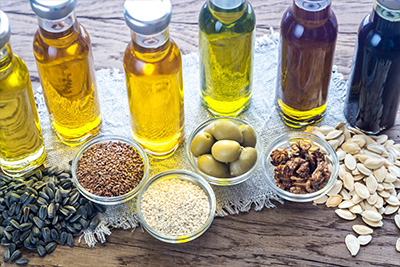
Olives, sunflower seeds, soybeans, sesame seeds, avocados, and other oil-bearing plants are naturally permissible from a Halal perspective. However, the botanical source is only the beginning of the story.
Understanding how an oil is extracted and processed, and what materials are used along the way, provides a more complete picture of its Halal status.
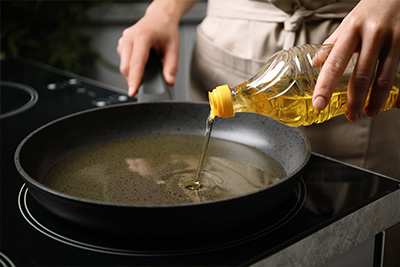
How Is Vegetable Oil Extracted?
There is no single method used to produce vegetable oil. The extraction process depends on the raw material, desired oil characteristics, processing efficiency, and intended finished product.
Mechanical and Cold Pressing
Mechanical pressing uses physical force to release oil from seeds or nuts. Before pressing, the raw material may be cleaned, dehulled, cracked, flaked, conditioned, or heated. The extracted oil can then be settled, centrifuged, or filtered to remove suspended solids.
Cold pressing is also mechanical extraction, but processing conditions are controlled to limit excessive heat exposure. This helps preserve more of the oil's natural flavor, aroma, pigments, antioxidants, and other minor components.
These processes generally involve fewer processing steps than conventional refining.
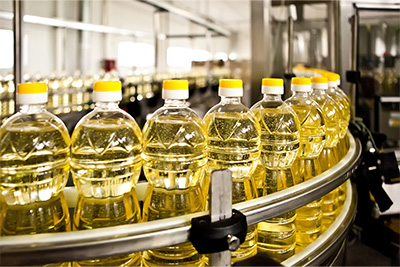
Olive Oil: A Different Extraction Process
Olive oil is different from most seed oils because the oil is extracted from the fleshy olive fruit. Olives are cleaned and crushed into a paste. The paste undergoes malaxation, a controlled mixing step that allows small oil droplets to combine. Centrifugation then separates the oil from water and olive solids. Even this primarily mechanical process may involve processing aids.
For example, micronized talc, a mineral processing aid, can be used to improve oil separation from difficult olive pastes, and enzyme preparations have been studied for their ability to break down plant cell-wall components and facilitate oil release.
Are These Enzymes Animal-Derived?
This is an important Halal question, but seeing the word "enzyme" shouldn't automatically raise an animal-origin concern.
Enzymes used in vegetable-oil processing are predominantly produced through microbial fermentation (fungi or bacteria), with plant-derived enzymes also used. Animal-derived food enzymes exist, but they aren't characteristic of the enzyme systems associated with this kind of processing — largely because microbial fermentation suits large-scale manufacturing so well: it's cost-effective, scalable, and delivers consistent enzyme activity and purity from batch to batch.
From a Halal perspective, however, the source should still be verified rather than assumed. Where relevant, the review should consider not only the active enzyme but also the complete commercial preparation, including carriers, stabilizers, and other components.
ISA's breakdown of enzyme sourcing in Halal cheese and dairy production walks through how this same animal/plant/microbial sourcing question plays out in another category.
Solvent Extraction
Large-scale commodity-oil production may use solvent extraction to recover more oil than mechanical pressing alone.
Hexane has traditionally been widely used because it efficiently dissolves oil. After extraction, the solvent is separated and recovered, and the resulting crude oil normally undergoes further refining.
Some manufacturers combine the two methods through pre-press/solvent extraction: mechanical pressing removes part of the oil first, followed by solvent extraction to recover additional oil from the remaining press cake.
Aqueous and enzyme-assisted technologies also exist, using water and, in some processes, enzymes to help release oil from plant structures.
Does Every Extracted Oil Need Refining?
This is an important distinction. Some oils are intended to retain their natural sensory and compositional characteristics and undergo only minimal finishing after mechanical extraction. Examples include extra virgin and virgin olive oil, virgin avocado oil, and many cold-pressed specialty oils like flaxseed oil and nut oils.
For virgin and cold-pressed oils, the pathway can be relatively simple: the oil is mechanically extracted, then clarified through settling or centrifugation and filtration before becoming the finished oil. These oils do not undergo conventional chemical or physical refining.
Other oils, particularly many large-scale commodity oils, are extracted as crude oils that require further refining. Refining removes or reduces components such as phospholipids, free fatty acids, pigments, trace metals, waxes, moisture, and volatile compounds to produce an oil with the desired stability, appearance, flavor, purity, and shelf life.
How Is Vegetable Oil Refined?
Vegetable oils are generally refined using either chemical refining or physical refining. Both approaches share the same overall objective: removing or reducing undesirable components while improving the oil's quality, stability, appearance, flavor, and shelf life. The main difference is how certain impurities, particularly free fatty acids, are removed.
Chemical Refining
In chemical refining, the oil typically undergoes degumming, neutralization, bleaching, and deodorization. During degumming, water and sometimes citric or phosphoric acid are used to help remove phospholipids, commonly called "gums." Some modern processes may also use enzymes. During neutralization, sodium hydroxide reacts with free fatty acids to form soap, which is then separated from the oil. Bleaching follows, using adsorbent materials such as bleaching earth or activated clay to remove pigments, residual soaps, trace metals, oxidation products, and other impurities. Finally, deodorization uses high temperature, vacuum, and steam to remove undesirable volatile compounds responsible for unwanted odors and flavors.
Physical Refining
Physical refining eliminates the conventional caustic-neutralization step. The oil undergoes more intensive pretreatment and degumming, followed by bleaching. Free fatty acids are then removed primarily by steam distillation under vacuum at elevated temperatures during the deacidification/deodorization stage.
Depending on the type of oil, additional processes such as dewaxing or winterization may also be used to remove naturally occurring waxes that can cause cloudiness at lower temperatures.
Where Does Halal Verification Become Important?
Most of the core materials used in conventional vegetable-oil refining are not inherently animal-derived. Water, sodium hydroxide, phosphoric acid, mineral bleaching earth, talc, and silica, for example, generally present little concern regarding animal origin.
Greater attention should instead be given to source-dependent materials whose names or functions do not necessarily reveal their complete composition. These may include enzyme preparations, certain anti-foaming agents, filter or clarifying aids, lubricants, emulsifiers, fatty-acid derivatives, and other formulated processing aids or food-contact materials. Depending on their formulation, some components may originate from microbial, plant, synthetic, mineral, or animal sources.
This is why the appropriate Halal question is not simply, "Could this processing aid be animal-derived?" The more meaningful questions are: "What exactly is the material? What is its source? How is it used, and does it come into contact with the oil?"

Processing Aid Does Not Mean Ingredient
This distinction is especially important for consumers. An ingredient is intentionally present as a component of the finished food, while a processing aid is used for a technological purpose during manufacturing and may later be removed, transformed, or remain only at technically unavoidable levels — a distinction FDA's own food ingredient definitions draw as well.
Therefore, the ingredient statement on a bottle of vegetable oil does not necessarily identify every material used during its production. This does not mean that vegetable oils contain hidden animal ingredients. Rather, it explains why Halal assurance looks beyond the ingredient label and evaluates the actual manufacturing process and the materials used along the way. For a broader look at how this distinction applies across other product categories, see ISA's overview of Halal certification compliance components.
Vegetable oils begin with plants, but Halal assurance does not stop at the plant source. Understanding the extraction method, refining process, processing aids, and other materials used along the way provides confidence that Halal integrity has been maintained from seed to bottle.